
OpenPinas: One Month In
NOTE
Key takeaway: simple systems and clear defaults make execution easier.

Photo from Unsplash.
OpenPinas: One Month In
86% of Philippine provinces are controlled by political families. There's no single place to see who they are, how they're connected, or how this week's corruption scandal fits into the bigger picture.
OpenPinas is my attempt to fix that. Open map of dynasties, timeline of major events, weekly digests so the news actually sticks.
One month in: what shipped, how I run it, how it helps me stay connected, what I'd do differently.
Key Points
- System consistency matters more than shipping speed in month one.
- Small weekly iterations compound into visible product progress.
- Public feedback loops help prioritize what to build next.
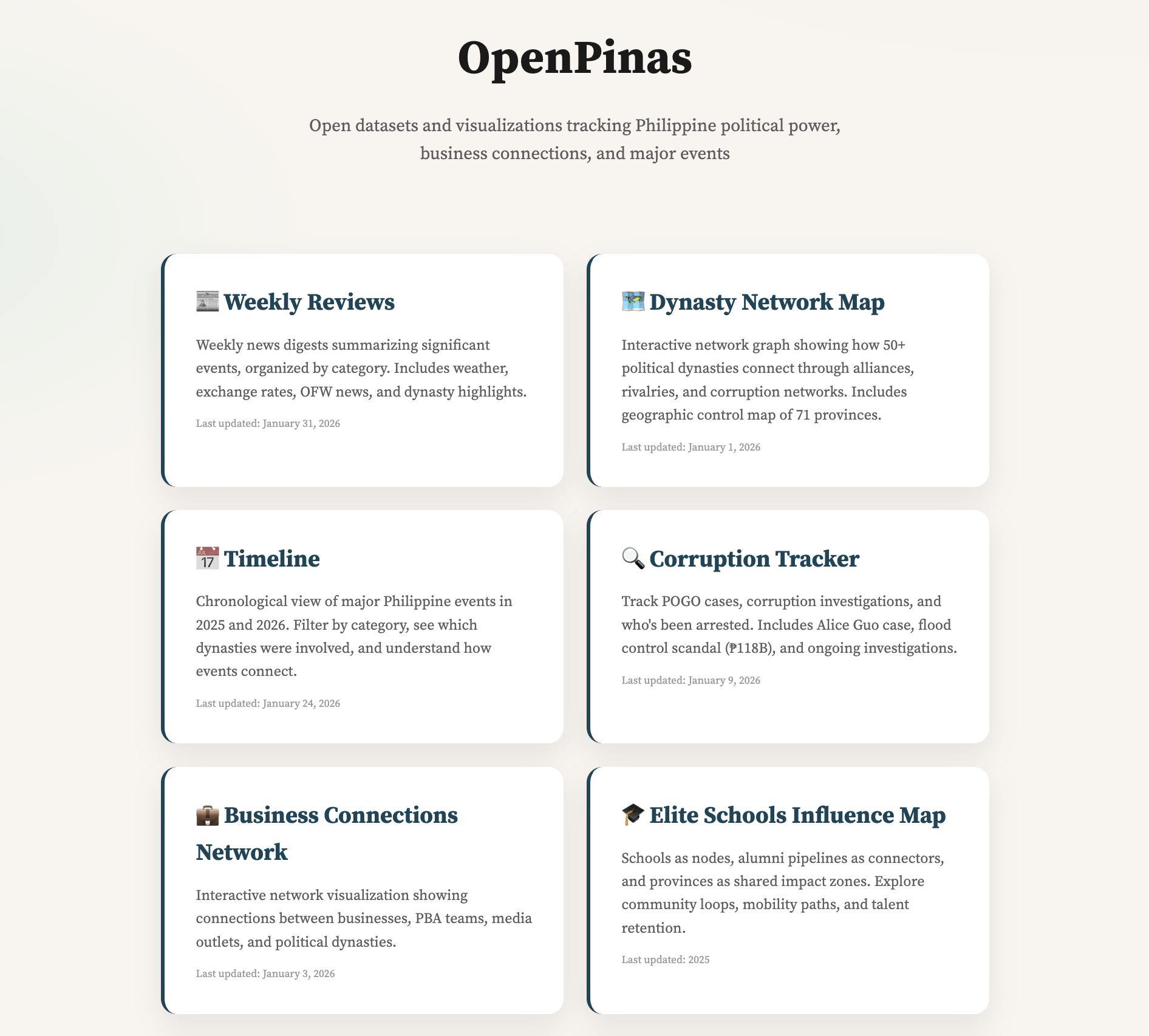 OpenPinas homepage showing dynasty network map, timeline, weekly reviews, and datasets.
What shipped this month
Project structure: GitHub issue templates, CONTRIBUTING.md, CODE_OF_CONDUCT, ROADMAP, pull request template, security policy. Makes it easier for people to contribute or point out mistakes.
Validation: GitHub Actions workflow checks the data. Broken JSON or broken links get caught before they go live.
Docs: README and project layout cleaned up. "Where do I start?" is now obvious.
Weekly reviews: Five weekly digests (Jan 2, 9, 16, 24, 31). Significant events by category, with dynasty links and context.
First monthly review: January 2026 got its first monthly recap—aggregated events, stats, links back to each week.
By the numbers: 71 dynasties, 71 provinces mapped, 148+ key figures, 2025 timeline (49 events) and 2026 timeline growing. Plus corruption tracker and business-connections data.
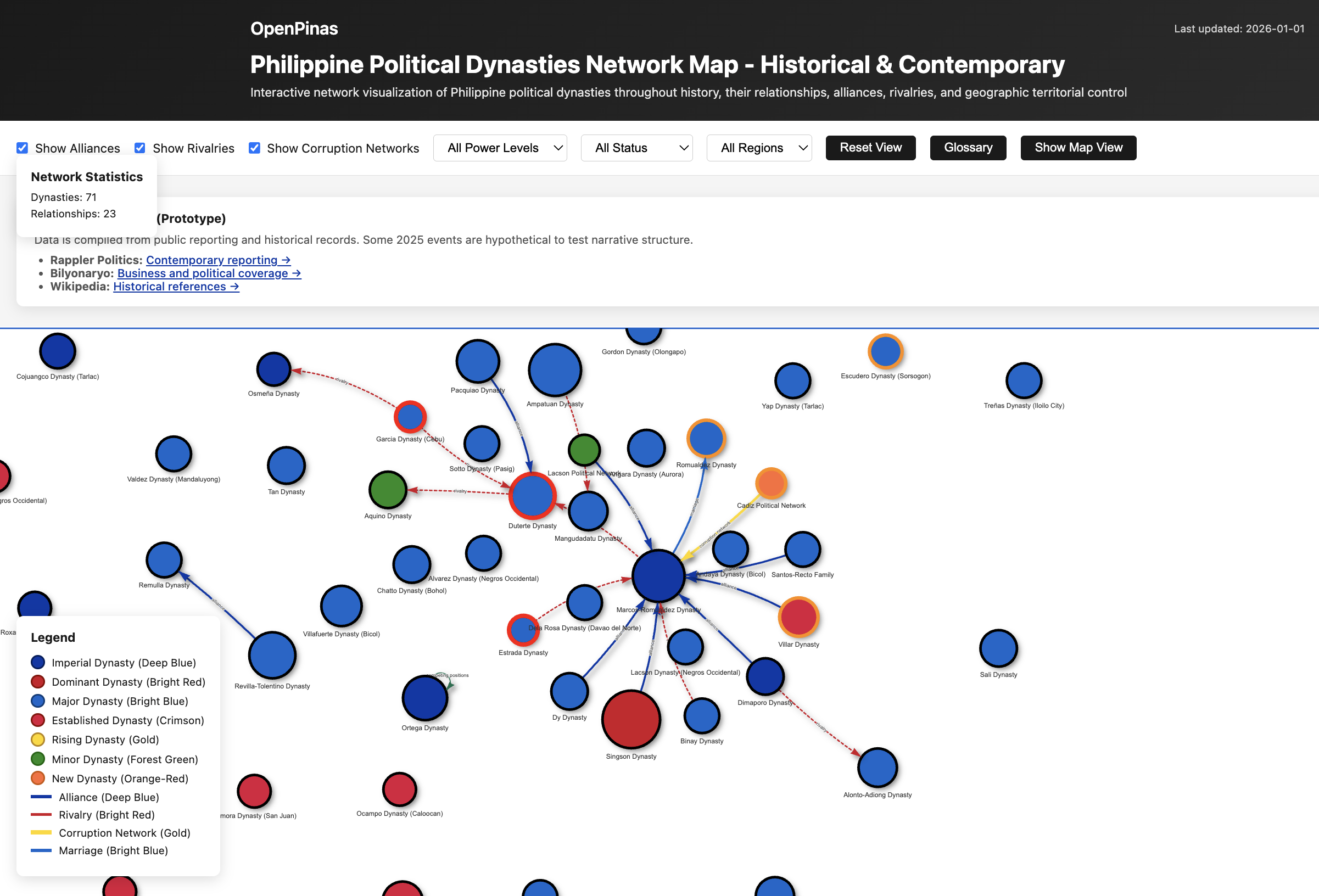 Interactive network map showing political dynasties and their connections across Philippine provinces.
How it actually runs
I don't do this full-time. The system is built to survive a busy week.
Timeline: I scan Tier-1 sources (Rappler, Inquirer, Philstar), pick what's significant, add it to the timeline JSON with date, category, and which dynasties are involved. One event = a few minutes.
Weekly review: Once a week I generate a digest from that timeline. Stats, top stories, dynasty mentions. The template and data do most of the work; I focus on "what mattered this week."
Monthly review: Same idea, one level up. Pull from the weekly reviews, add a short overview and some aggregates. January was the first full month where that loop closed.
No fancy infra. JSON files, static HTML, GitHub Pages. The constraint is "can I maintain this in the margins?" So far, yes.
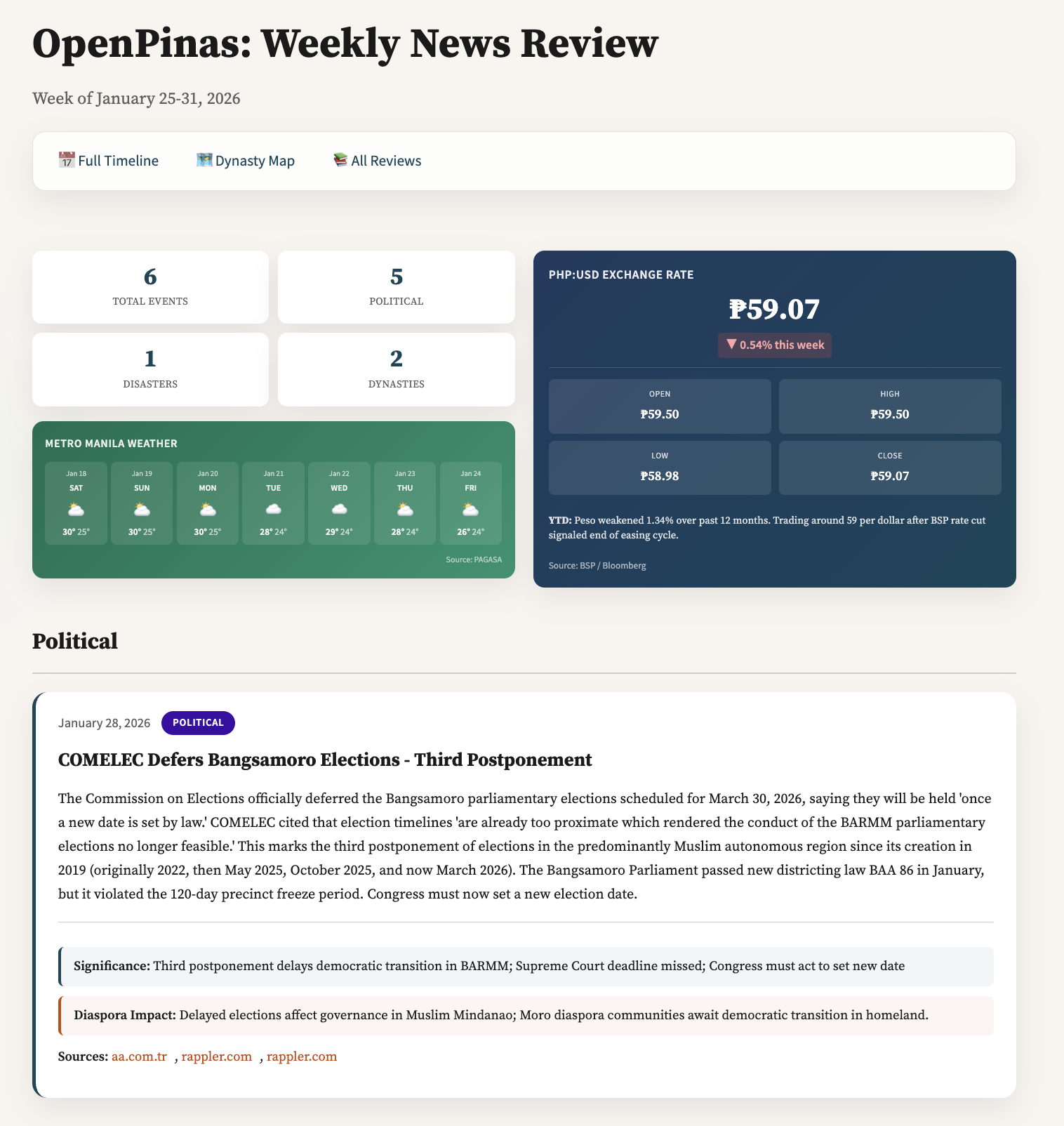 Weekly review page showing stats dashboard, event categories, and dynasty highlights.
How it helps me stay connected
I didn't expect this part.
Living outside the Philippines, it's easy to either ignore the news (guilt) or get sucked into every headline (overwhelm). OpenPinas is the middle path.
A ritual, not a feed. The weekly review is a fixed moment to ask "what actually happened?" Not scroll, summarize. That rhythm keeps me in touch without making it a full-time job.
Names and connections, not just events. When a dynasty shows up in the timeline, I can click through to who they are, where they hold power, how they're linked. The news stops being isolated headlines and starts fitting into a map I'm slowly building.
Something to show. When family or friends ask "what's going on there?" or "who's that again?" I can point to the site. Map, timeline, weekly digest. It's my cheat sheet for staying coherent about home.
A baseline for family. Without knowing what they're watching, they may believe the latest vlogger posing as a journalist or faceless accounts posting possibly AI-tainted images. Having a Tier-1–sourced timeline gives me something to reference when we talk. I'm not guessing and they're not left with whatever the algorithm served.
Contribution as connection. Adding an event or fixing a link is a small way to engage with what's happening. The project ties "staying informed" to "doing something with it," even if it's tiny.
OpenPinas isn't only a civic-tech thing. It's how I stay connected to the Philippines in a way that's sustainable and shareable.
What worked and what I'd do differently
What worked:
Weekly review as a forcing function. Knowing I have to publish a digest by Sunday keeps the timeline from going stale. The deadline is small and realistic.
Starting with "major" dynasties and one timeline. I didn't try to cover every family or every event. Narrow scope made the first month shippable.
Putting contribution docs in early. CONTRIBUTING, ROADMAP, issue templates don't guarantee contributors, but they make the project feel real and make it easy to say "here's how you could help."
What I'd do differently:
Data cleanup earlier. I spent time fixing dynasty IDs and counts after the fact. Next time I'd lock a minimal schema and validation before adding more data.
One "how to read this" explainer. New visitors see a network and a timeline. I'd add a short "what you're looking at and why it matters" so the hook is obvious in 30 seconds.
One thing I noticed
The timeline made me notice how often the same families show up across different kinds of news—political, economic, legal. Seeing that in one place (and on a map) makes "political dynasty" feel less abstract and more like a pattern you can actually trace.
That's the experience I want to keep sharpening.
Try it / share it
Explore: OpenPinas on GitHub Pages — network map, timeline, weekly and monthly reviews. The repo is Vercel-ready if you want that as the canonical host.
Suggest: Missing a dynasty or an event? Open an issue or reply with an idea.
Forward: If you know someone in the diaspora or in civic tech who'd care, send them the link.
First month down. February: more events, same rhythm, and that "how to read this" explainer if I can squeeze it in.